Find a Location

From professional emptying and high-pressure cleaning to environmentally sound disposal (including emulsions and sewage)—we provide a full-service solution for your separator system. All work is performed in compliance with DIN 4040-100 and DIN 1999-100 standards, with comprehensive documentation.
Grease traps and light liquid separators are standard equipment in restaurants, commercial kitchens, gas stations, repair shops, and industrial facilities. They ensure that grease, oil, and light liquids are separated from wastewater—before they enter the sewer system and cause clogs, unpleasant odors, and environmental damage.
As the operator of a separator system, you are required under DIN 4040-100 (grease separators) and DIN 1999-100 (light liquid separators) to have your system regularly drained, cleaned, and maintained. The proper disposal of the collected materials may only be carried out by certified waste management companies.
Infravadis handles the entire waste management process: from on-time emptying using combined vacuum and flushing trucks, to high-pressure cleaning, and environmentally responsible disposal. All work is thoroughly documented—you receive legally compliant disposal records for your operational logbook and for submission to the authorities.
Our specially trained staff has many years of experience handling hazardous materials and ensures that all work is carried out safely. In addition, we offerleak testingfor your grease trap system as well as cleaning of the grease-carrying supply lines using professional pipe cleaning equipment.
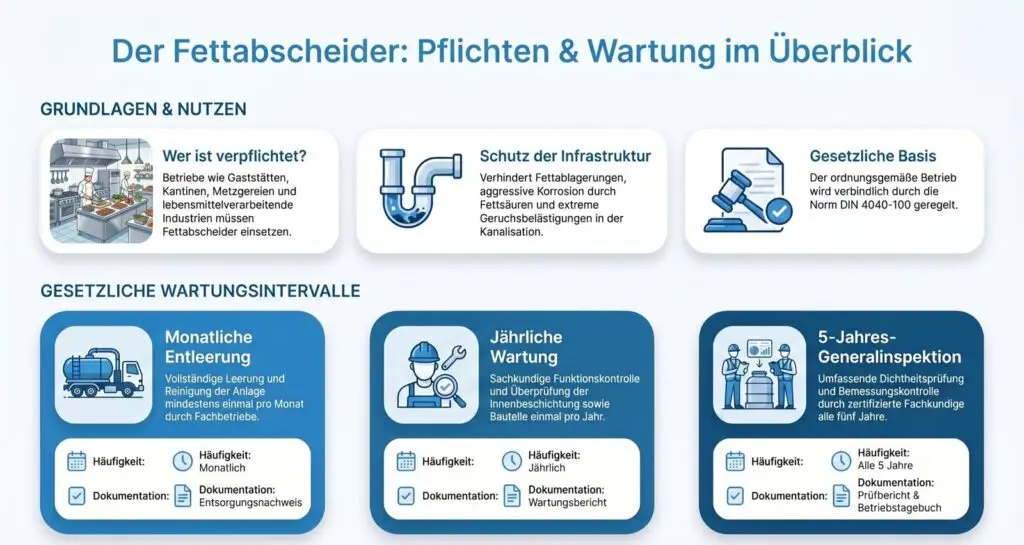
Operators of separator systems have certain obligations: Regular emptying, complete documentation in the operating log, and a general inspection with a leak test every 5 years are required by law. Violations can result in fines, regulatory requirements, and, in the worst case, closure of the facility. We help you meet all these obligations on time.
From grease trap emptying to comprehensive inspections—we offer a full range of services for your grease trap system.
Professional emptying and high-pressure cleaning of your grease trap system in accordance with DIN 4040-100. Includes a disposal certificate and operation log documentation.
Comprehensive service for light liquid separators in accordance with DIN 1999-100—from emptying and cleaning to environmentally sound disposal.
Professional suction services for sand and sludge traps, septic tanks, sludge basins, and retention basins using high-performance vacuum trucks.
Mandatory general inspection of your separator system every 5 years, including a leak test in accordance with DIN 4040-100 or DIN 1999-100, performed by certified specialists.
As the operator of a separator system, you must comply with these requirements—and we’re here to help you with every single one.
Visual inspection of the grease trap, checking the coating thickness, and recording the results in the operation log
Complete emptying, cleaning, and proper disposal – frequency depends on the separator’s capacity and operating conditions
Maintenance performed by qualified personnel, including inspection of all functional components in accordance with DIN 4040-100
Leak testing and comprehensive inspection by certified experts
Complete documentation of all emptying, maintenance, and inspections – evidence required by regulatory authorities
Keep all accompanying documents and proof of proper disposal for at least 5 years
Our proven process—efficient, clean, and fully documented.
We coordinate the optimal time for emptying—tailored to your operational schedule—to minimize downtime.
Our combined vacuum and flushing trucks completely empty the separator. The grease layer, sludge layer, and residual water are collected separately.
After draining the unit, we clean the separator and all grease-carrying supply lines with high-pressure water to ensure optimal performance.
We check that the separator system is working properly, prepare the disposal certificate, and document everything for your operating log.
As a certified waste management company, we ensure that all materials we collect are disposed of in an environmentally responsible and legally compliant manner.
Certified waste management company with all necessary permits
Scheduled intervals – tailored to your operations
Work in accordance with DIN 4040-100 & DIN 1999-100
Emptying, Cleaning, Disposal & Documentation
Request a no-obligation quote today for the emptying and disposal of your separator system—transparent and with no hidden costs.
Everything you need to know about grease trap emptying, oil separator maintenance, and your operational responsibilities.
Emptying intervals depend on the separator’s volume, the amount of grease, and regulatory requirements. In the food service industry, emptying once a month to once every three months is standard practice. DIN 4040-100 stipulates that the grease layer must not exceed 80% of the storage capacity.
Emptying and disposal may only be carried out by certified waste management companies with the appropriate permits. Infravadis holds all necessary permits and issues legally binding disposal certificates.
Operators who fail to have their separator systems properly maintained and drained risk fines, regulatory sanctions, and, in the worst case, the shutdown of their operations. In addition, insurance coverage may be voided in the event of damage caused by inadequate maintenance.
The cost depends on the volume of the separator, the travel distance, and the disposal costs. We will provide you with a transparent, fixed-price quote in advance—including emptying, cleaning, disposal, and documentation.
Grease separators compliant with DIN 4040-100 are used in the food service and food processing industries to separate animal and vegetable fats from wastewater. Light liquid separators (oil separators) compliant with DIN 1999-100 are used in workshops, gas stations, and industrial facilities to separate mineral oils and fuels.
Yes, we offer customized maintenance contracts with fixed intervals. This ensures that all legal deadlines are met, and you benefit from predictable costs and priority scheduling.
Comprehensive solutions for your drainage infrastructure—from cleaning to rehabilitation.
Professional cleaning of clogged grease traps and drains.

Camera inspection to assess the condition of grease traps and drains.
Compliance testing of your separator systems and supply lines.
Repair of damaged grease-carrying lines and separators.
Waste management services for industrial separators and equipment.
Are you a licensed waste management company interested in joining our network?
Select your nearest location